How to Do an Annual Review (Two Hours, Three Passes)
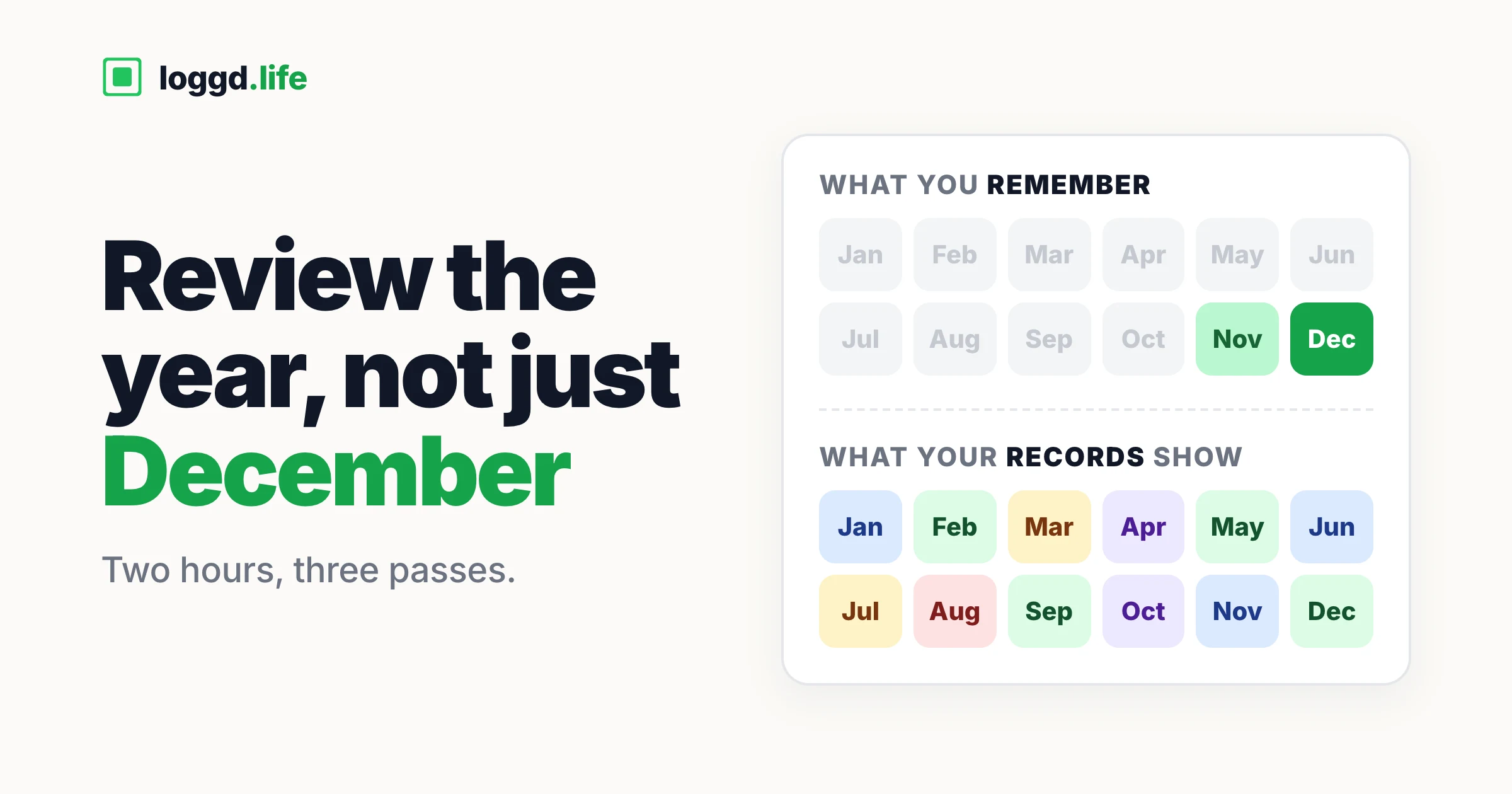
Most year-end reviews are a review of December. Here is the two-hour version: reconstruct the year from evidence first, then ask ten questions, then decide one thing.
Practical guides, app tips, and ideas on habits and productivity.
Most year-end reviews are a review of December. Here is the two-hour version: reconstruct the year from evidence first, then ask ten questions, then decide one thing.
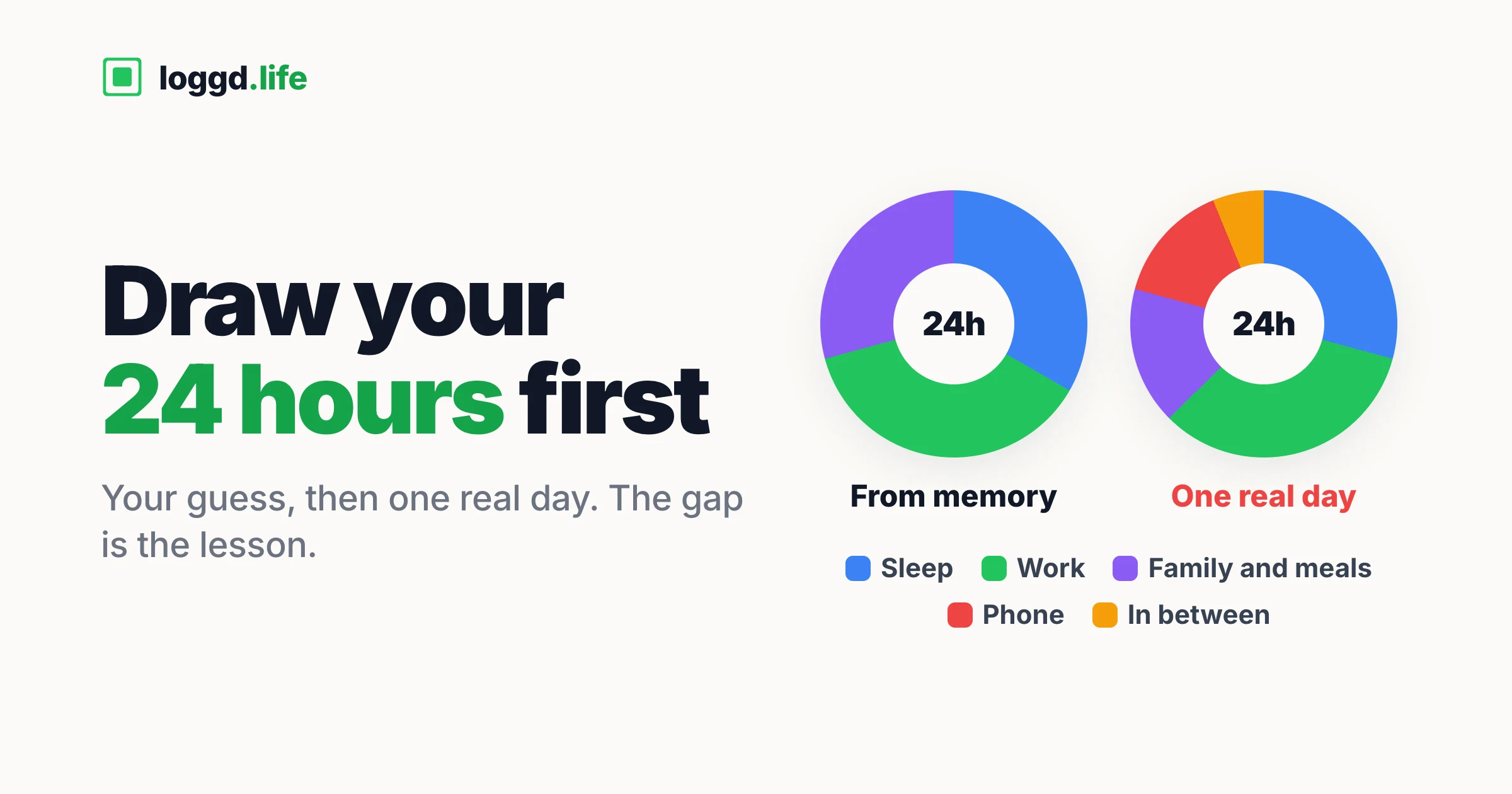
A five-minute visual exercise for people who will never keep a log: draw your day from memory, check it against one honest day, and read the gap between the two pictures.
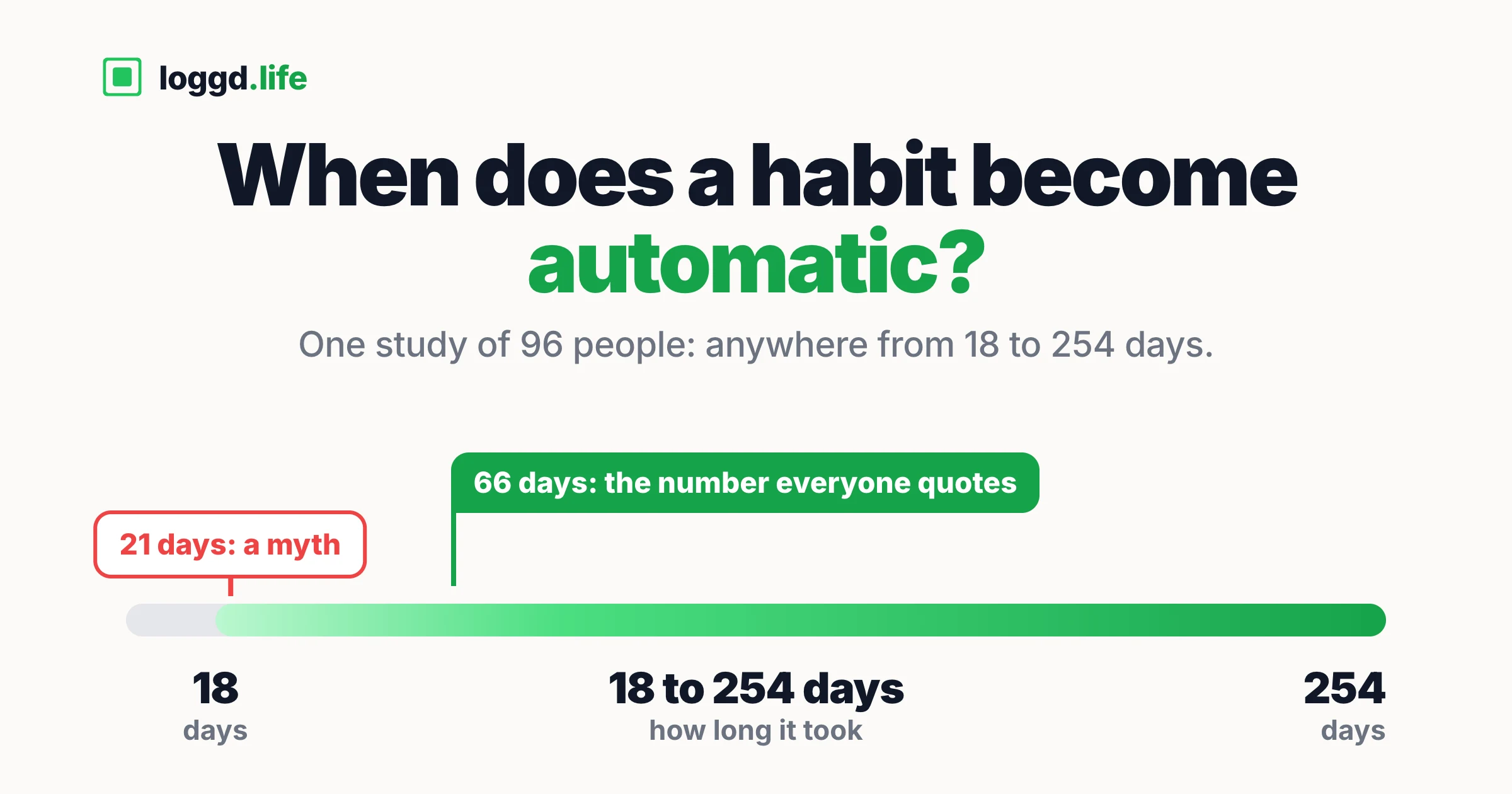
Automaticity is a spectrum, not a switch. What moves the timeline, what week two, week six and month three actually feel like, and why any estimate is only an estimate.
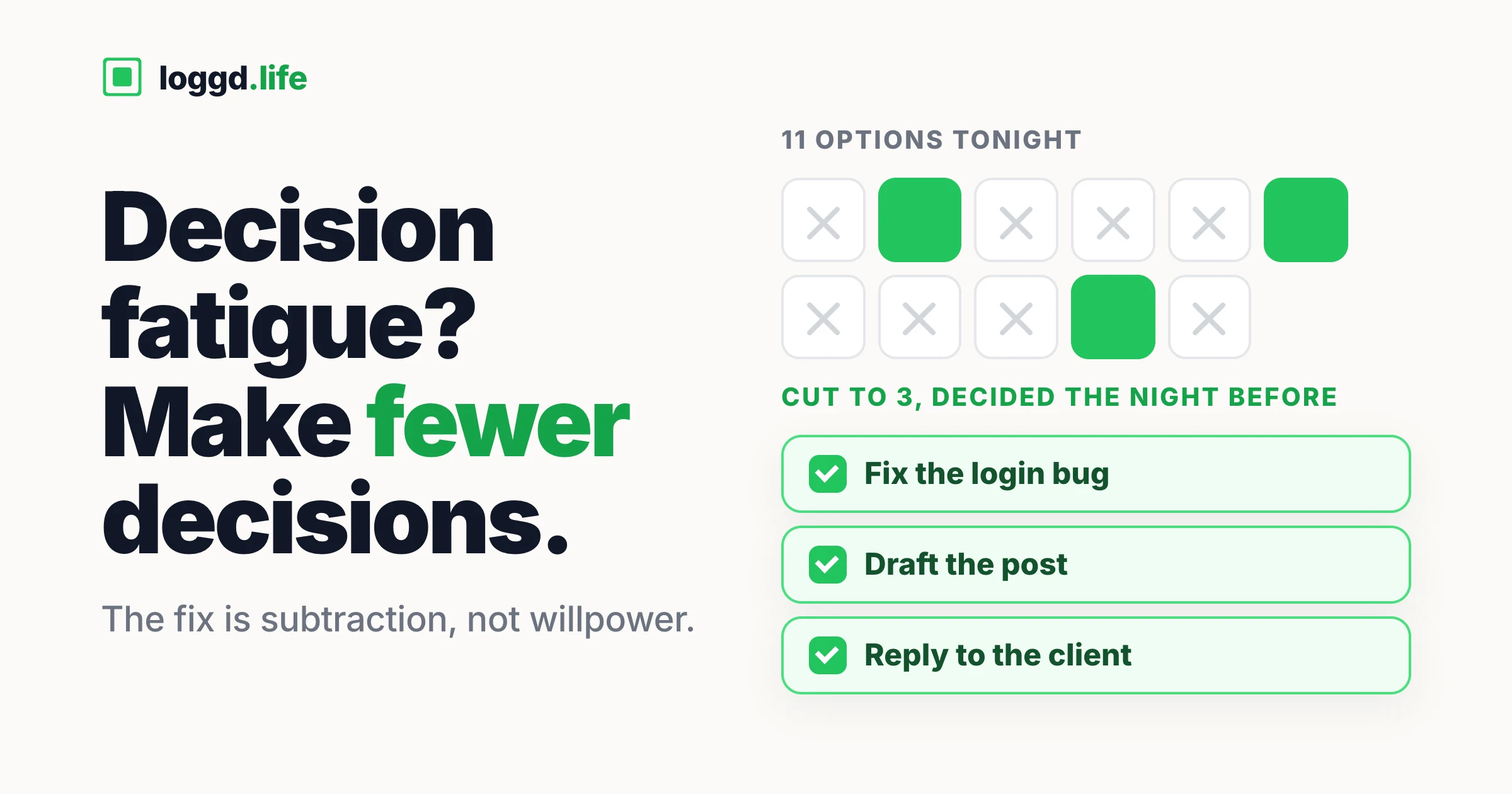
How decision fatigue actually shows up in an ordinary evening, why the famous science behind it is shakier than you have been told, and the only fix that holds: making fewer decisions.
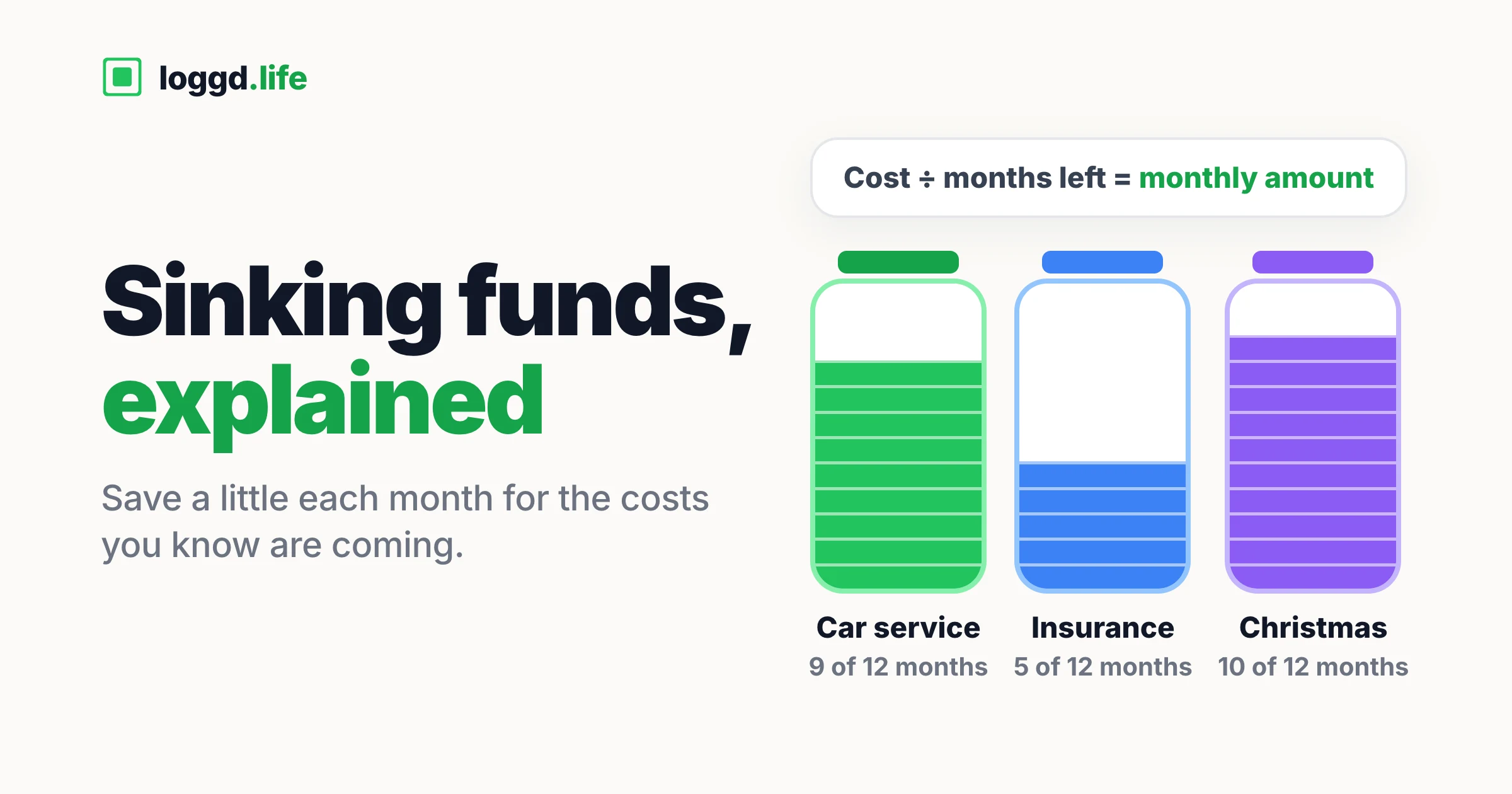
A sinking fund is money set aside monthly for a known future expense. How it differs from an emergency fund, which categories catch people out, and why the transfer is really a habit.
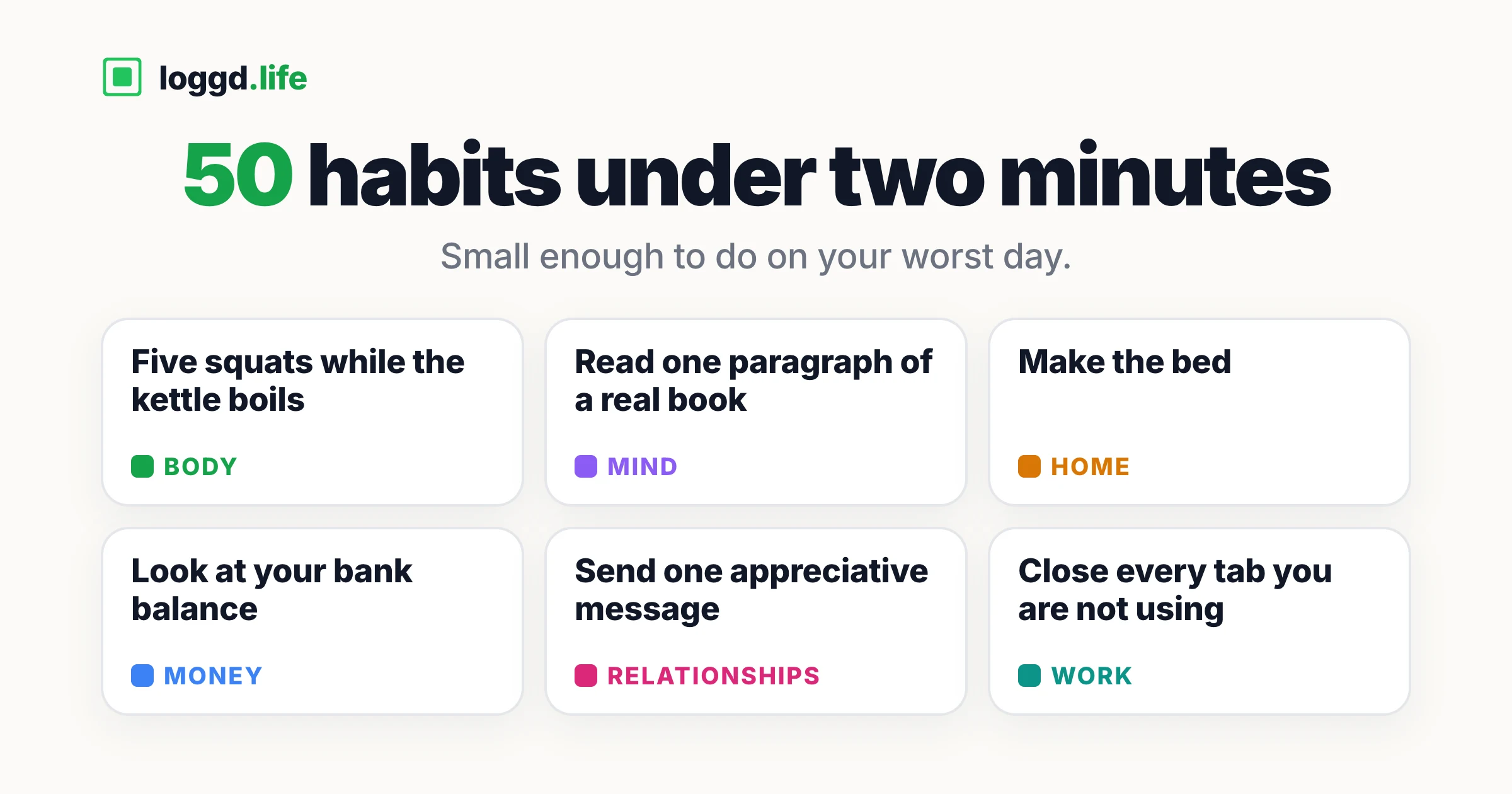
Fifty micro habits that genuinely fit inside two minutes, grouped by area, plus how to pick yours and why growing one too early is how people lose it.
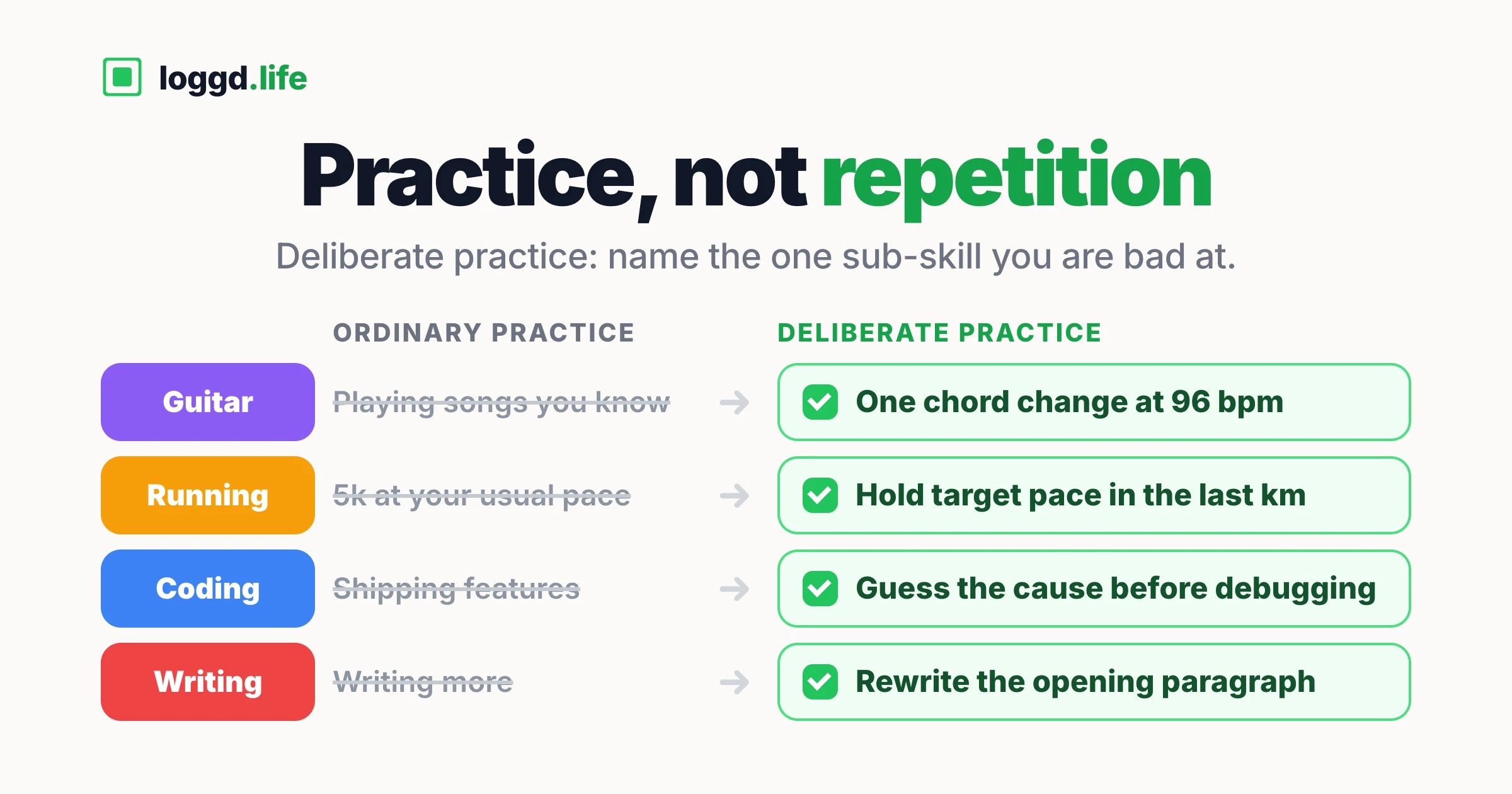
What separates deliberate practice from ordinary repetition, worked through four domains that each name the sub-skill and the feedback source, plus where the method stops transferring.
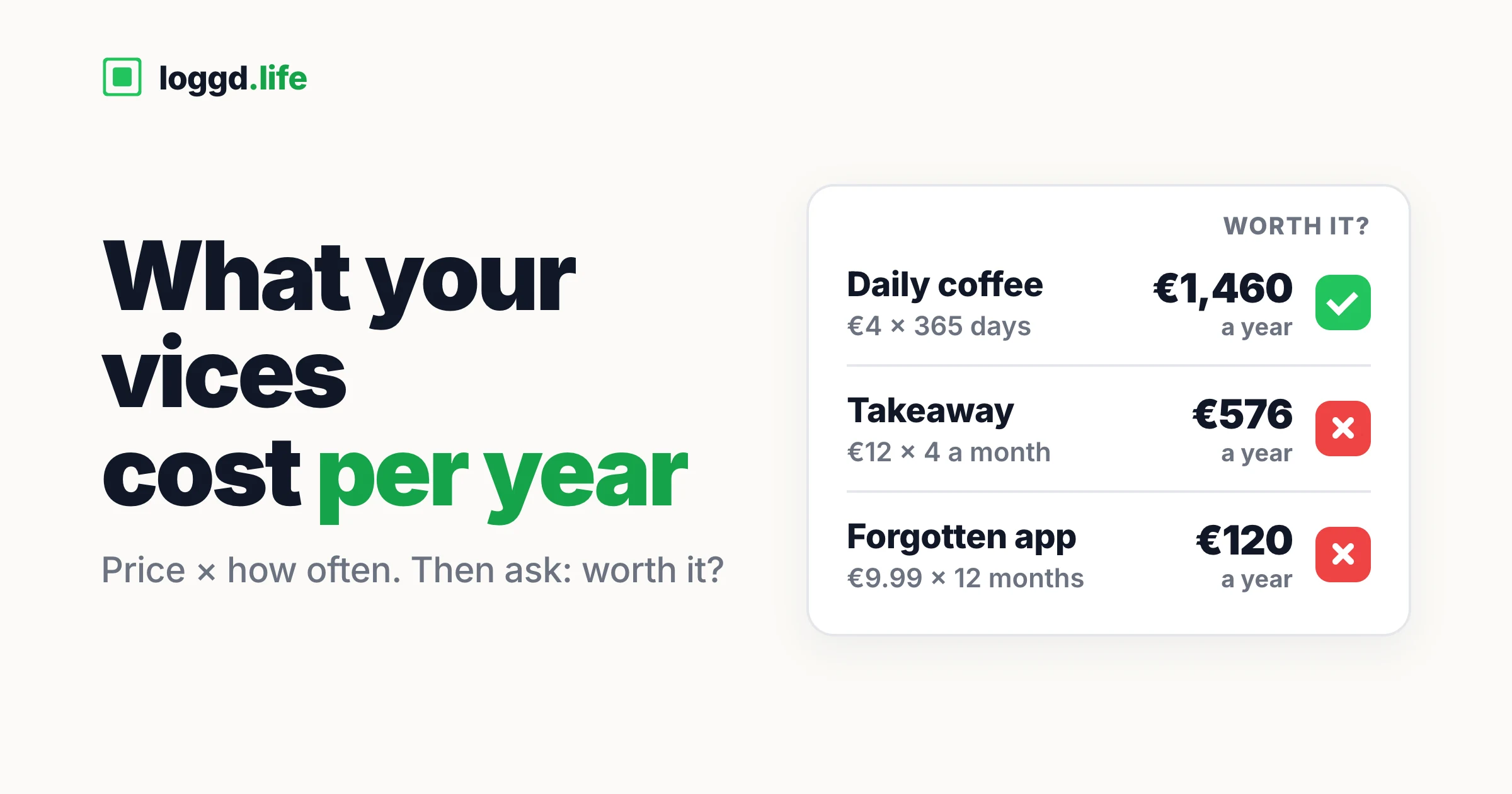
Every individual purchase is too small to argue with, which is why the annual number never gets calculated. How to run it category by category, and why the answer is not always quit.
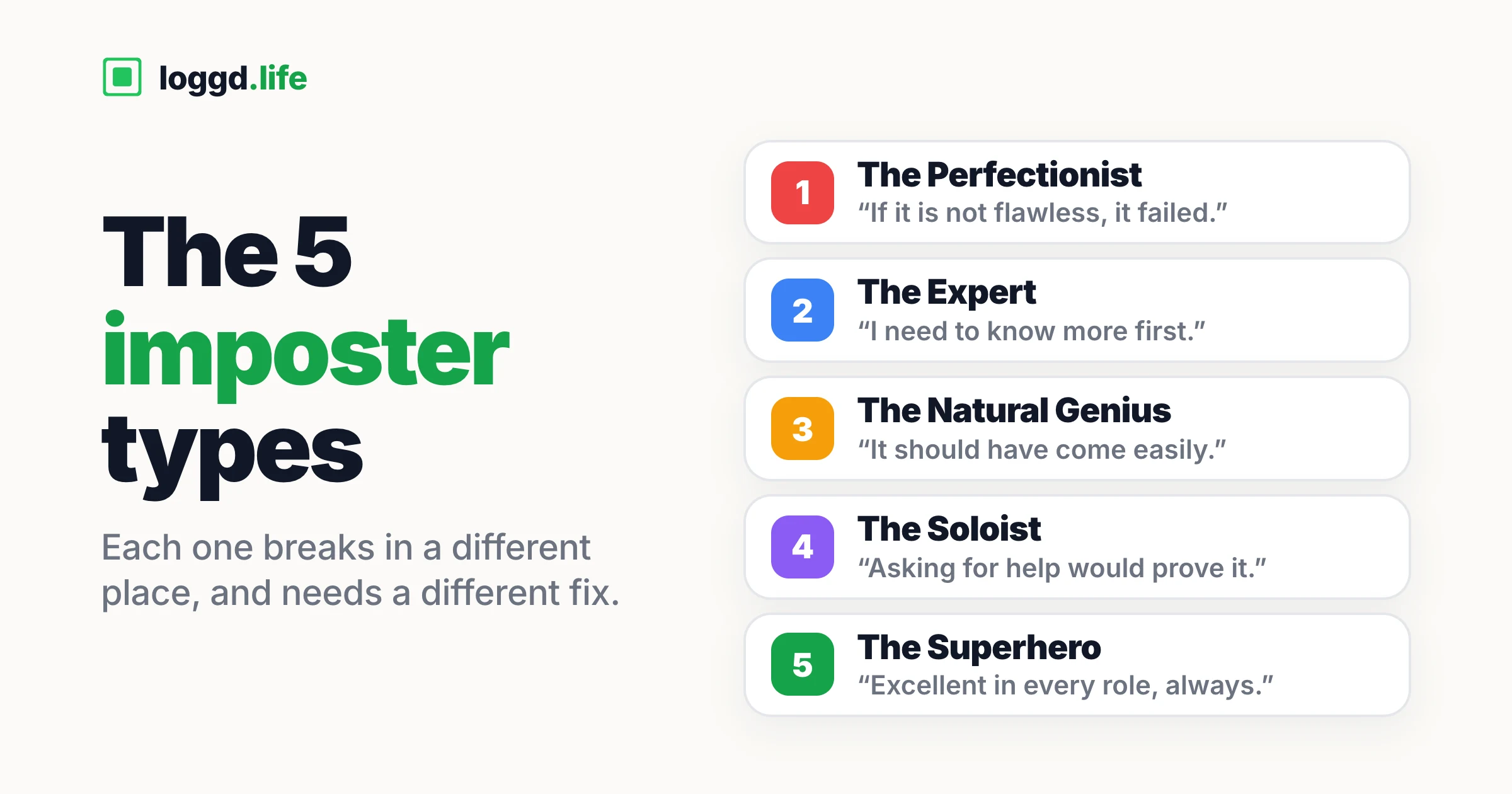
Valerie Young identified five imposter types, and the standard advice fails each one differently. Here is a portrait of each, the counter-move that fits it, and why a written record beats reassurance.
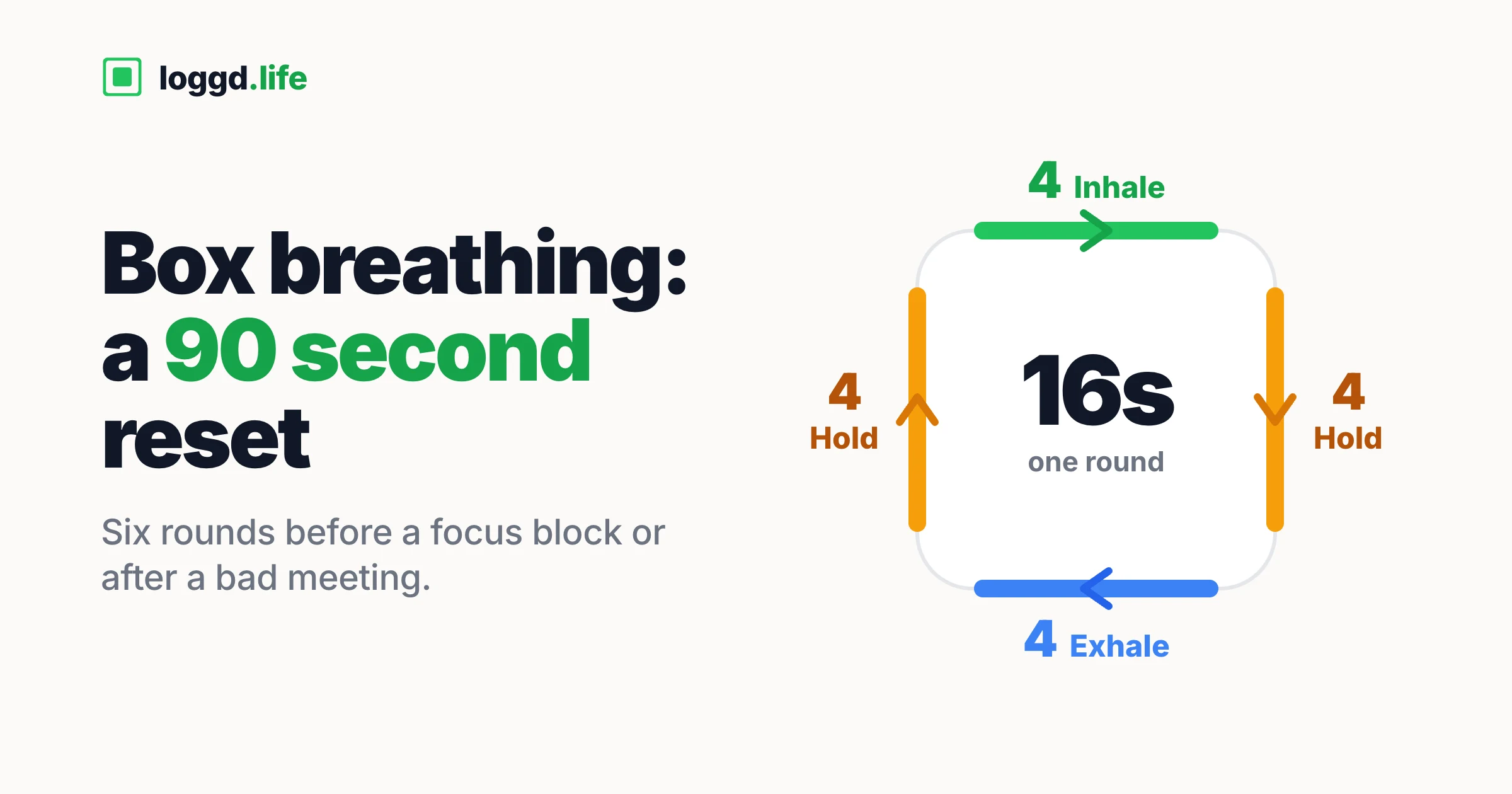
The 4-4-4-4 pattern, the three alternatives worth knowing, and the one use it is genuinely good at: resetting before a focus block or after a bad meeting.
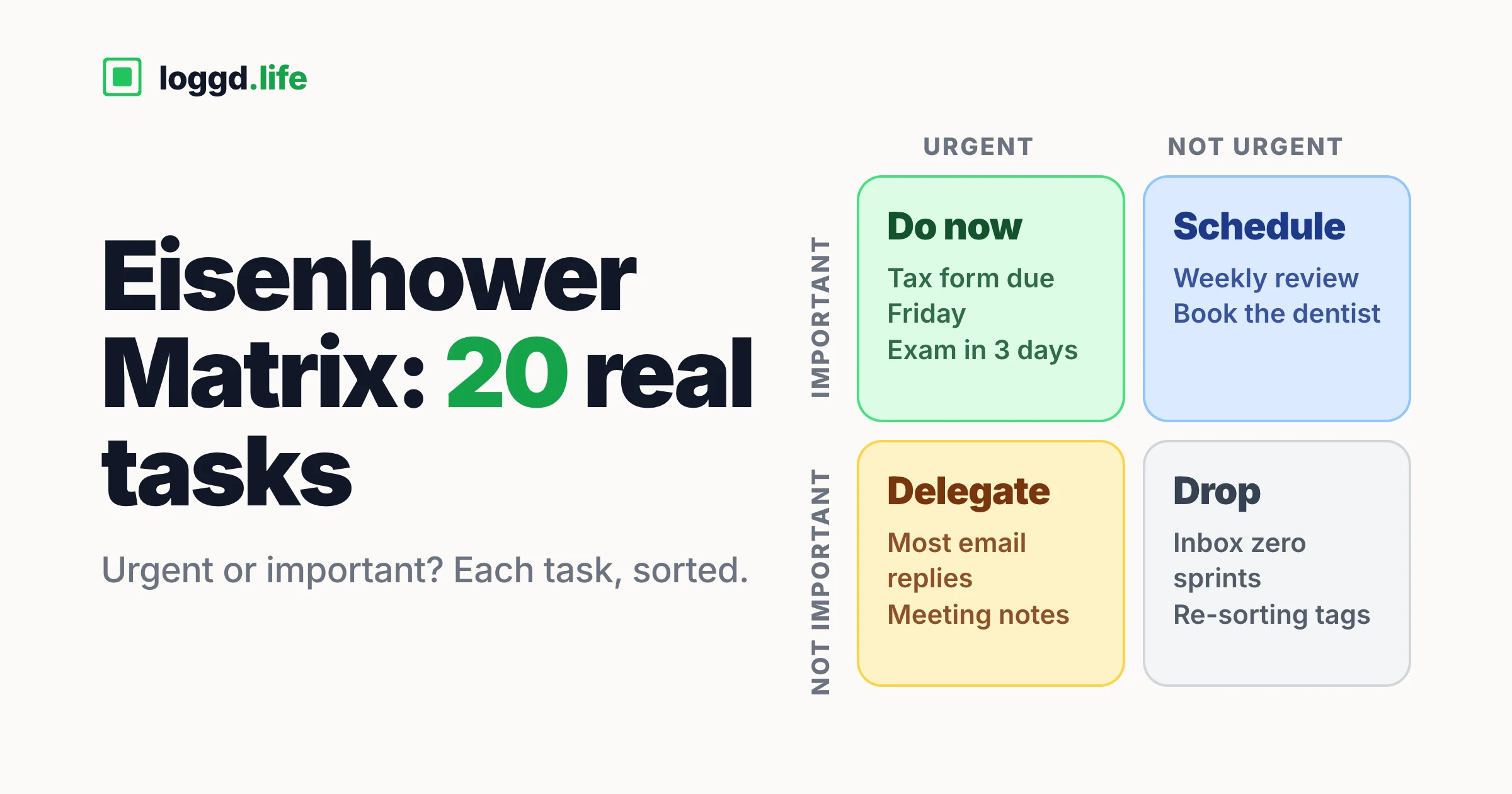
Twenty worked examples across a knowledge worker week, a student exam month and household admin, each with the reason it landed in that quadrant.
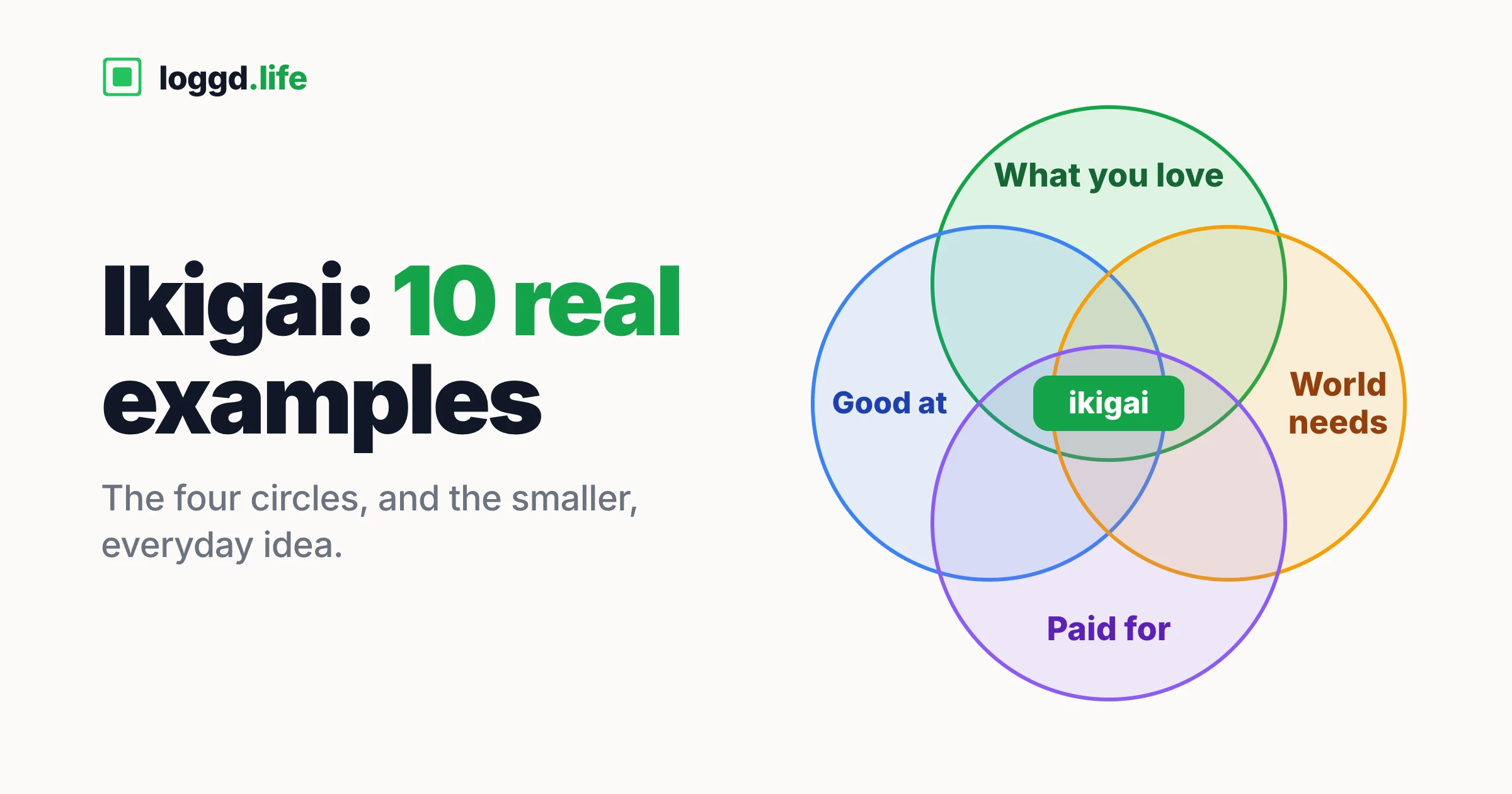
The famous four-circle ikigai diagram is a Western remix, not ancient Japanese philosophy. Here is both versions: the worksheet you came for, and ten ordinary examples of the smaller idea.
No posts match ""
Track habits, manage tasks, set goals, and level up with gamification. All in one free app.
Start Free